
Mattress ticking explained: the main fabric types
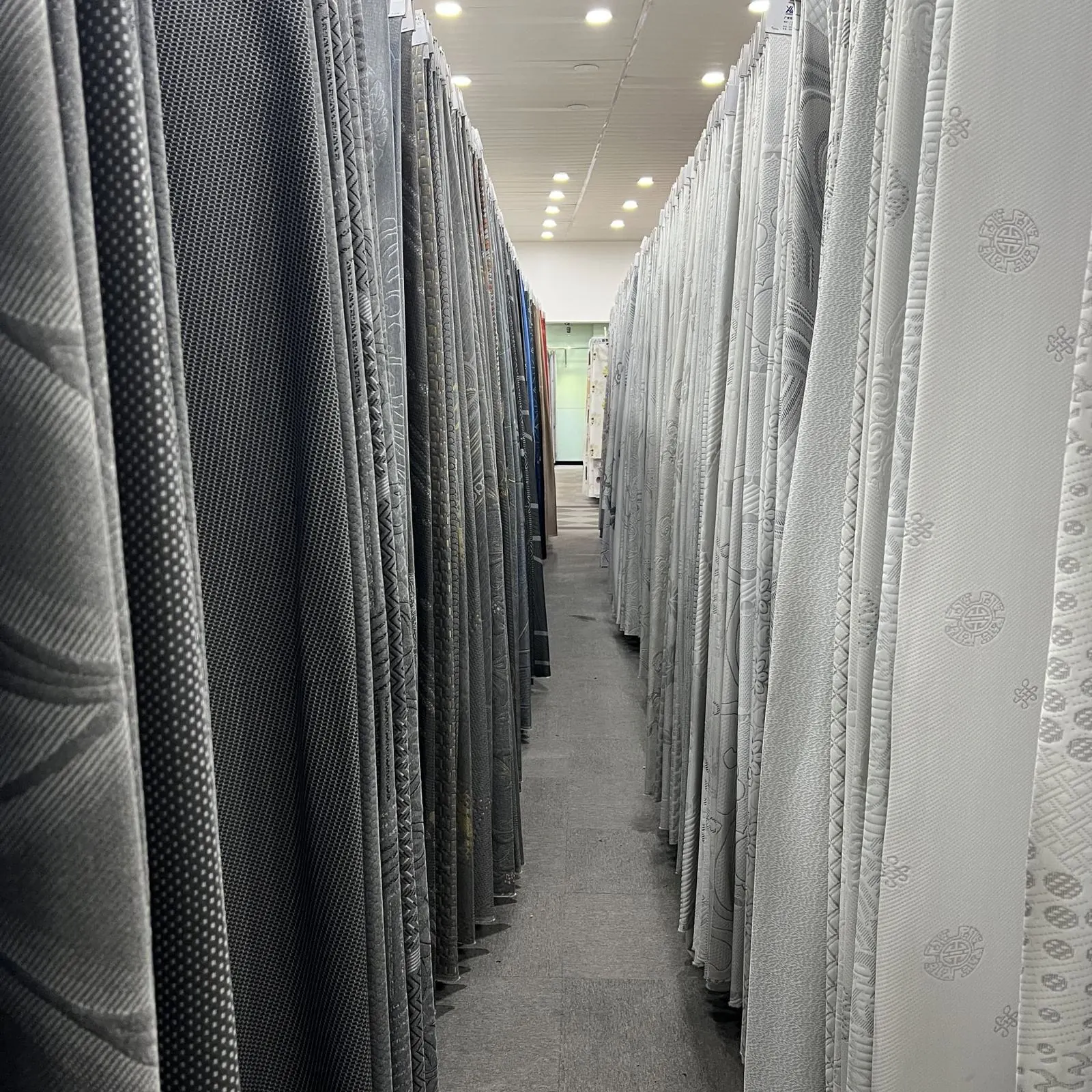
"Ticking" is the trade word for the fabric on the outside of a mattress. There are many brand names on the market, but almost every ticking falls into one of four groups. Knowing them makes it easier to build a range and compare quotes.
1. Stitchbond
Stitchbond is a non-woven polyester web held together by rows of stitching, then printed. It is the lowest-cost ticking and has a firm, paper-like hand. You will find it on economy mattresses and on bottoms and bases where nobody sleeps.
2. Woven damask (jacquard woven)
Damask is woven on jacquard looms, with the pattern formed by the weave. It is firm and stable, with a classic look, and is made from polyester or blends with viscose. It has long been the standard ticking for traditional innerspring mattresses and is still widely used on borders. See our jacquard woven ticking.
3. Knitted jacquard
Knits are made on circular knitting machines, usually as double-jersey jacquard. They are soft and stretchy, quilt well and follow the foam beneath, which is why they dominate on memory foam, latex and hybrid mattresses. More in What is knitted mattress fabric?
4. Tricot (warp knit)
Tricot is a thin, smooth warp-knitted polyester, dyed and printed. It is cost-effective and takes printed designs very well, so it is used on value-line tops and on borders and bottoms across all price levels. More in our tricot guide.
Special yarns and finishes
On top of these four constructions, many fabrics add a special yarn or finish to tell a story on the showroom floor: Tencel™ lyocell or bamboo for softness, cooling yarns or finishes, metallic yarns for a premium look, or functional treatments. These can add real value, but ask your supplier for the yarn content and for test data before you put a claim on your label.
How to choose
- Start from the mattress. Foam and hybrid tops usually want a knit; a tight-top innerspring often suits damask.
- Match borders and bottoms. Tricot or damask in a matching colour keeps the cost down without hurting the look.
- Compare like with like. When comparing quotes, check weight (g/m²), yarn content and width, not only the price per metre.
- See it quilted. The same fabric can look very different once quilted. Ask for a quilted sample or visit a showroom.